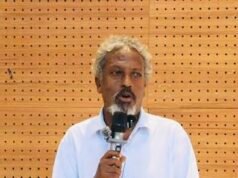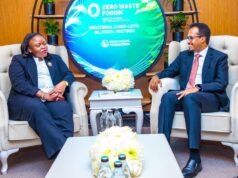
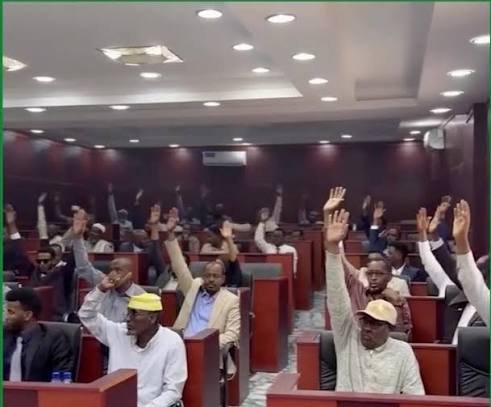
MOGADISHU — Somalia’s Federal Parliament witnessed a rare and dramatic moment on Saturday when lawmakers broke into applause after the Speaker’s office formally announced the removal of MP Fahiima Yusuf Quuje from her parliamentary seat, citing actions deemed incompatible with her constitutional responsibilities as a member of the Federal Parliament.
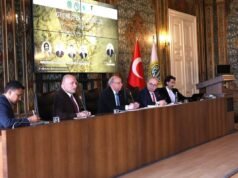
The announcement was delivered during a parliamentary session attended by dozens of legislators, with many members visibly welcoming the decision. The chamber erupted into applause as the statement was read, reflecting strong support among a significant number of lawmakers for the move.
Parliamentary authorities argued that Quuje’s public alignment with the Somaliland administration and her participation in activities associated with Somaliland’s political institutions constituted a breach of the obligations expected of a federal lawmaker. Officials maintained that members of Somalia’s Federal Parliament are required to uphold the unity, sovereignty, and constitutional framework of the Federal Republic of Somalia.
The decision follows weeks of political controversy surrounding Quuje, whose recent engagements and public positions drew criticism from several members of parliament and political figures in Mogadishu. Some lawmakers accused her of undermining federal institutions by associating herself with a political entity that seeks international recognition as an independent state.
Supporters of the removal described it as a necessary measure to protect the credibility of Somalia’s national institutions and send a clear message regarding parliamentary accountability. They argued that elected federal representatives must remain committed to the constitutional principles upon which the country’s governance system is based.
“This is about protecting the integrity of Parliament and ensuring that those entrusted with representing the Somali people remain loyal to the institutions they serve,” one lawmaker said following the session.
However, the decision has also sparked debate among political observers and constitutional experts. Critics have questioned whether the move could deepen political divisions and further complicate already strained relations between Mogadishu and Hargeisa. Some analysts argue that the case highlights broader disagreements over Somalia’s future political structure and the unresolved status of Somaliland.
Somaliland, which declared independence from Somalia in 1991, has operated with its own government, security forces, currency, and institutions for more than three decades. While it has maintained relative stability compared with many parts of Somalia, it has not gained formal international recognition as a sovereign state.
The removal of Quuje comes at a time when Somalia is navigating sensitive political and constitutional issues, including electoral reforms, federal-state relations, and ongoing efforts to strengthen national institutions. The development is expected to fuel further political debate both inside and outside parliament, with observers closely watching whether additional measures could be taken against other officials accused of supporting positions viewed as contrary to the federal government’s stance on national unity.
As reactions continue to emerge, the case is likely to remain a significant topic in Somalia’s political discourse, underscoring the enduring tensions surrounding Somaliland’s status and the challenges facing efforts to achieve a lasting political settlement between Mogadishu and Hargeisa.