
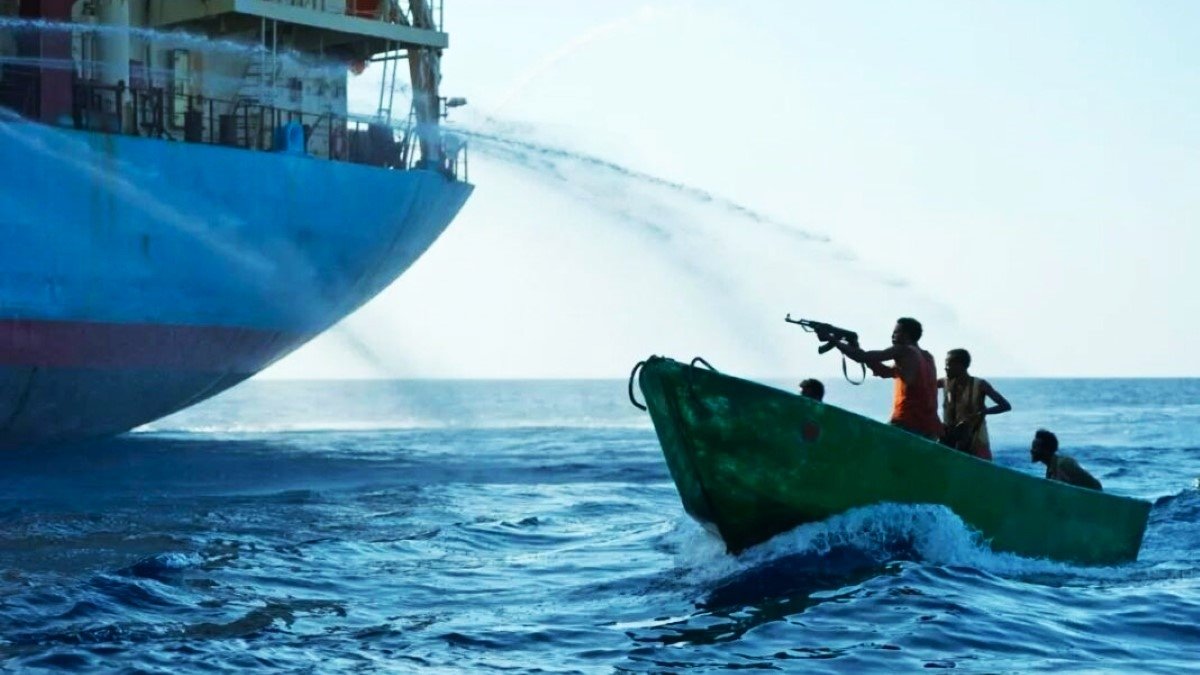
MUKALLA — An oil tanker has been seized off Yemen’s southern coast in an attack attributed to Somali pirates, marking the latest sign of a troubling resurgence in piracy across one of the world’s most strategically important shipping corridors.
According to Yemen’s coastguard, the tanker Asana was hijacked on Friday approximately 26 nautical miles (48 kilometers) off the coast of Hadramawt province. The incident has raised fresh concerns among regional governments, shipping companies, and international naval forces operating in the Gulf of Aden and the wider Horn of Africa region.
The United Kingdom Maritime Trade Operations (UKMTO), citing military sources, reported an “illegal boarding” approximately 65 nautical miles (120 kilometers) south of the Yemeni port city of Mukalla. The agency said the vessel had been boarded by “unauthorised personnel” and urged all ships transiting the area to exercise extreme caution and immediately report any suspicious activity.
Initial reports indicated that at least one armed individual was seen near the vessel’s bridge shortly after the boarding. Maritime tracking data suggested the tanker was moving slowly southeast, raising fears that it could be heading toward the Somali coastline, where pirates have historically taken hijacked vessels and crews hostage while demanding multi-million-dollar ransom payments.
Yemeni authorities said they were working closely with international maritime agencies and regional partners to determine the tanker’s condition and monitor its movements. Naval assets, including Yemeni coastguard vessels, were reportedly deployed toward the area, while surveillance aircraft conducted reconnaissance flights in an effort to locate and track the hijacked ship.
The seizure of the Asana is the latest indication that Somali piracy is once again becoming a major security concern after more than a decade of relative decline. Between 2005 and 2012, Somali pirate networks carried out over 1,000 attacks against commercial vessels, earning an estimated $400 million in ransom payments and threatening global trade routes.
An international naval campaign involving the European Union, NATO, the United States, and other partners significantly reduced pirate activity, leading many shipping companies to scale back security measures. By 2013, successful hijackings had become increasingly rare, and in 2023 the shipping industry formally removed the Indian Ocean from its list of high-risk piracy zones.
However, maritime security experts say conditions have changed dramatically over the past year. Since April alone, the French Navy’s Maritime Information Cooperation and Awareness Center (MICA Center) has documented at least 18 piracy-related incidents, including several successful hijackings. At least three vessels remain in pirate hands and are reportedly being held for ransom.
Analysts attribute the resurgence to a combination of factors, including reduced naval patrol coverage, instability in parts of Somalia, and the diversion of international military resources to security crises in the Red Sea and the Strait of Hormuz. The ongoing threat posed by Yemen’s Houthi conflict has also forced many shipping companies to alter traditional routes, bringing more vessels closer to Somali waters and increasing their exposure to pirate attacks.
The Gulf of Aden remains one of the world’s most vital maritime arteries, connecting the Indian Ocean to the Red Sea and the Suez Canal. An estimated 12 to 15 percent of global trade and nearly one-third of the world’s container traffic passes through the route annually, making any disruption a matter of international concern.
The growing threat has prompted renewed diplomatic and military efforts. Egypt recently announced that it was working through its embassies in Mogadishu and Riyadh to secure the release of Egyptian sailors aboard the tanker Eureka, which was hijacked off the Somali coast earlier this year.
Meanwhile, the European Union has strengthened its maritime presence in the region. Earlier this week, EU foreign policy chief Kaja Kallas signed a Status of Forces Agreement with Djibouti, ensuring continued logistical support for Operation Atalanta and the Aspides mission, both of which conduct anti-piracy and maritime security patrols in the Red Sea and the Horn of Africa.
Speaking in Djibouti, Kallas said the Aspides mission had protected more than 670 merchant vessels and rescued 128 seafarers in less than two and a half years, underscoring the importance of maintaining a strong international naval presence as piracy once again threatens one of the world’s busiest shipping routes.
The fate of the Asana, its crew, and cargo remains unclear as international authorities continue efforts to track the vessel and assess the situation.