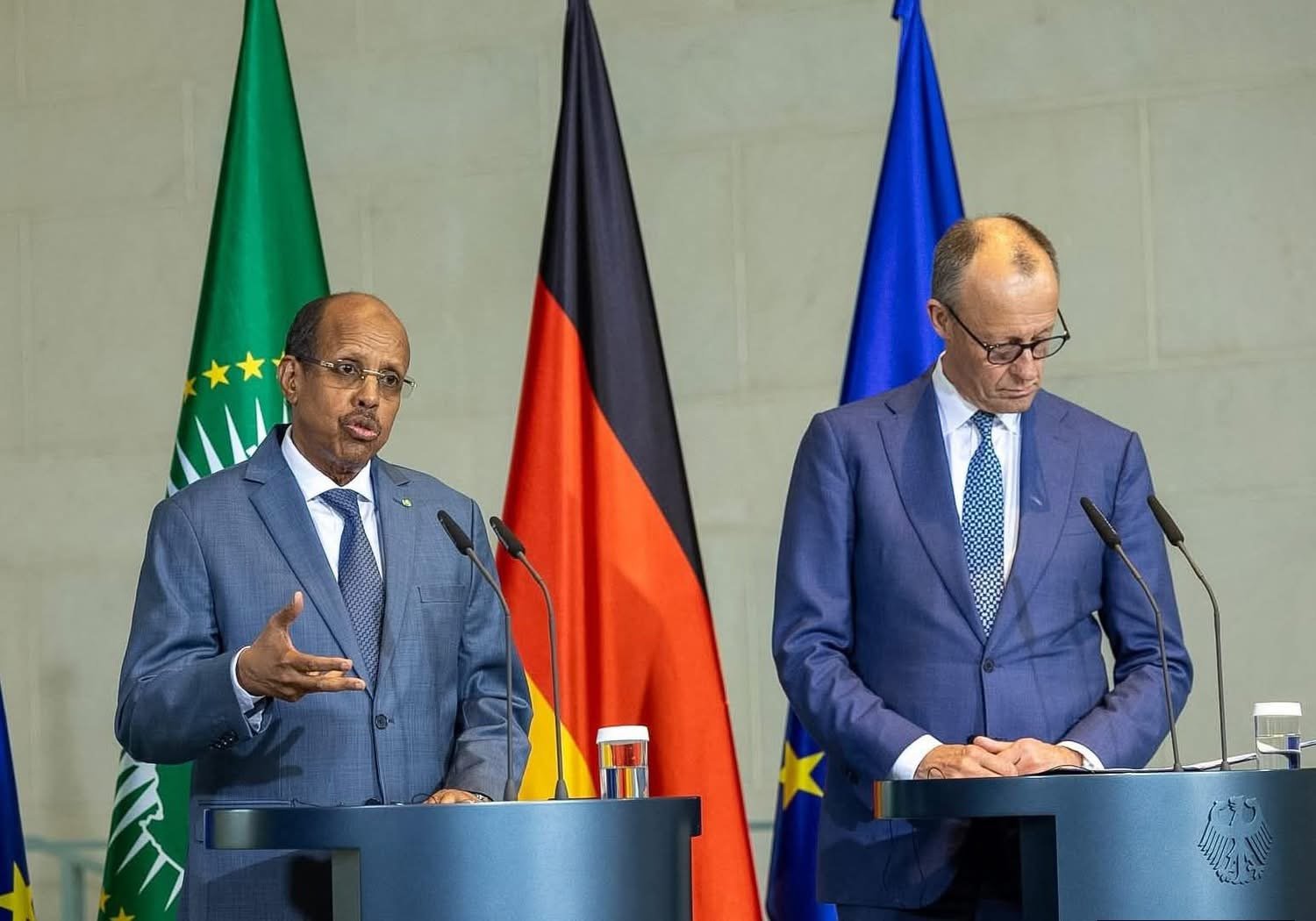
BERLIN — The recent high-level talks between the African Union and Germany in Berlin mark a renewed effort by both sides to strengthen strategic cooperation on peace, development, and long-term economic transformation.
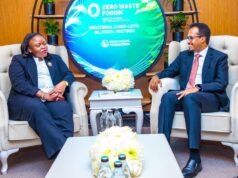
The meeting between the African Union leadership, represented by AU Commission Chair Mahmoud Ali Youssouf, and German Chancellor Friedrich Merz focused on expanding collaboration in key areas including peace and security, regional integration, renewable energy, and broader Africa–Europe partnership frameworks.
What stands out in this latest engagement is not only the breadth of topics discussed, but the growing shift from traditional aid-based relations toward a more structured strategic partnership model.
Both sides emphasized that today’s global challenges—ranging from armed conflicts to climate change and energy transition—require coordinated responses between Africa and Europe, rather than fragmented bilateral initiatives.
In particular, renewable energy cooperation featured prominently, reflecting Europe’s interest in Africa’s vast solar and green energy potential, and Africa’s need for investment in sustainable infrastructure and energy access.
A major political focus of the discussions was the ongoing conflict in Sudan. Both the AU and Germany reiterated calls for an immediate ceasefire and a return to constitutional governance.
The war in Sudan has become one of the most destabilizing crises in the Horn of Africa and the wider Red Sea region, with implications for migration, regional security, and humanitarian conditions.
The joint diplomatic message signals continued international concern, but also highlights the limits of external influence in enforcing peace without stronger regional enforcement mechanisms.
The AU–Germany engagement reflects a broader recalibration in Africa–Europe relations, where the African Union is increasingly positioning itself as an equal negotiation partner rather than an aid recipient.
For Germany, Africa is becoming central to its foreign policy priorities—especially in energy security, migration management, and supply chain diversification. Chancellor Friedrich Merz has emphasized a more pragmatic foreign policy approach that links development cooperation with strategic economic interests.
At the AU level, leaders such as Mahmoud Ali Youssouf are pushing for stronger continental coordination, especially in conflict mediation and economic integration under frameworks like the African Continental Free Trade Area.
If implemented effectively, the renewed AU–Germany cooperation could lead to expanded renewable energy investments across African states, stronger joint mediation efforts in conflict zones such as Sudan, increased infrastructure financing linked to green transition goals, more structured Africa–Europe migration and labor frameworks, and greater AU influence in shaping international development agendas.
However, challenges remain. Previous AU–Europe partnerships have often struggled with implementation gaps, uneven funding commitments, and differing political priorities between African states and European governments.
The key test of this renewed partnership will not be the declarations made in Berlin, but whether concrete projects and political commitments follow in the coming months—especially on Sudan and energy investment.