Since the collapse of Somalia’s central government in 1991, the country has experienced one of the world’s longest-running state fragility crises. The breakdown of national institutions triggered prolonged civil conflict, the emergence of armed factions, widespread insecurity, and large-scale displacement of civilians both internally and across borders. Over the past three decades, Somalia has also faced recurrent humanitarian emergencies, including famine conditions, droughts, and outbreaks of disease, all of which have further deepened vulnerability among affected communities.
In response to this prolonged instability, a broad range of international actors—including states, regional organizations, and humanitarian agencies—have engaged in Somalia through different forms of support. These interventions have varied significantly in scope and purpose.
Some countries prioritized emergency humanitarian assistance, delivering food aid, clean water, medical supplies, and shelter to populations affected by conflict and natural disasters. International humanitarian organizations also played a critical role in supporting internally displaced persons (IDPs) living in informal settlements with limited access to basic services.
Other states focused on refugee protection, hosting large Somali diaspora communities across Africa, the Middle East, Europe, and North America. In these host countries, Somali refugees were provided asylum, legal residency, education opportunities, and pathways to citizenship, contributing to long-term integration and diaspora formation.
A further category of international engagement focused on peacebuilding and state reconstruction. This included support for constitutional processes, reconciliation conferences, training of security forces, and efforts to rebuild governance institutions such as the police, judiciary, and public administration. While progress has been uneven, these initiatives have contributed to gradual institutional recovery.
Among the various international partners, Türkiye has in recent years emerged as one of Somalia’s most visible and multifaceted bilateral partners. Turkish engagement in Somalia has combined humanitarian response, development cooperation, and security assistance under a coordinated state-led framework.
Türkiye’s humanitarian involvement expanded significantly during major famine crises, where Turkish agencies and civil society organizations provided emergency relief, medical support, and logistical assistance. In the development sector, Türkiye has been involved in infrastructure rehabilitation, road construction, port and airport management support, and the expansion of public services such as healthcare and education. Turkish-supported hospitals and training institutions have become part of Somalia’s public service landscape in key urban centers.
In the security domain, cooperation has included training programs for Somali armed forces and police units, aimed at strengthening national security capacity and supporting state-building efforts. This comprehensive engagement has positioned Türkiye as a strategic partner in Somalia’s broader reconstruction process.
However, in recent days, amid internal political divisions among Somali political actors, there has been a visible increase in social media narratives and campaigns targeting Türkiye’s role in Somalia. These discussions have emerged in a politically charged environment shaped by competing domestic interests and differing perspectives on foreign partnerships.
While legitimate concerns regarding the implementation, transparency, and effectiveness of externally funded programs are widely recognized, analysts emphasize that such issues are best addressed through institutional mechanisms. These include bilateral diplomatic dialogue, technical joint commissions, audit processes, and structured policy consultations between the relevant authorities.
Experts caution that the shift from institutional engagement to politicized public campaigns may risk undermining established cooperation frameworks. Somalia–Türkiye relations, built over more than a decade of sustained engagement, have developed into a strategic partnership spanning humanitarian assistance, development cooperation, trade, education, and security collaboration.
Observers stress that preserving this relationship requires separating technical policy concerns from politically motivated narratives. They argue that constructive engagement, transparency, and accountability mechanisms offer a more effective path toward improving program delivery and ensuring mutual benefit.
For this reason, commentators emphasize restraint and responsibility in public discourse, particularly when addressing sensitive international partnerships. Strengthening institutional trust and maintaining open channels of communication are viewed as essential for sustaining Somalia’s recovery process and advancing long-term stability.
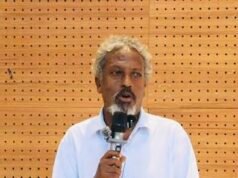
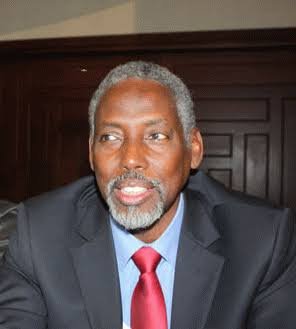
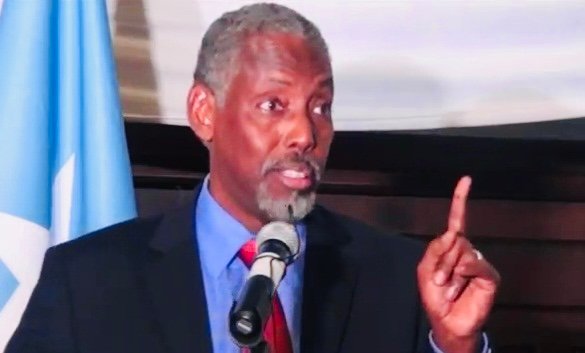
— Reported by Horn Africa News, citing Dr. Abdurahman M. Abdullahi (Baadiyow).