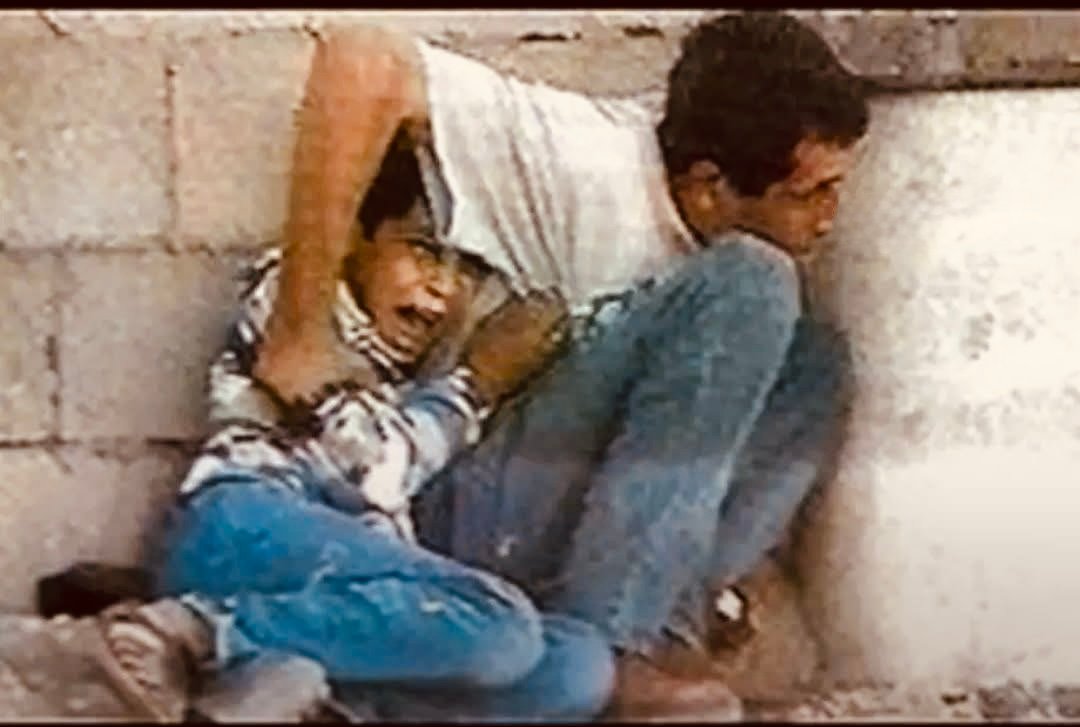
CAIRO, — Twenty-five years after the death of Palestinian child Muhammad al-Durra became one of the most enduring images of the Second Palestinian Intifada, his photograph has been included in Egypt’s secondary-school history curriculum.
The image appears in a lesson titled “The Second Palestinian Intifada 2000,” placing al-Durra’s story within a broader account of the Palestinian-Israeli conflict, peace efforts and the events that followed the uprising.
The textbook caption identifies the photograph as “The moment Muhammad al-Durra was shot.” The image has remained deeply embedded in the collective memory of Palestinians and many others around the world as a symbol of the human cost of conflict.
Al-Durra, who was 12 years old, was killed in September 2000 after he and his father, Jamal al-Durra, sought shelter during clashes in Gaza. Images of the father and son hiding behind a concrete structure were broadcast internationally and became closely associated with the Second Palestinian Intifada.
Jamal al-Durra has welcomed the decision to include his son’s image in the curriculum, saying it can help younger generations understand that behind political conflicts, military operations and historical dates are real people, including children and civilians who suffer the consequences.
The inclusion of the image has also renewed discussion about the human cost of the Israeli-Palestinian conflict and the international community’s response to civilian suffering.
Critics of Israel’s military conduct have described the killing of Palestinian civilians and children as evidence of what they regard as grave violations of human dignity and international law. They argue that the international community has a responsibility to protect civilians and prevent atrocities, regardless of the identity of those responsible.
At the same time, allegations concerning specific incidents and the broader conflict remain politically and legally contested, and claims of genocide or other international crimes require determination through appropriate legal and investigative processes.
For many Palestinians and supporters of the Palestinian cause, however, al-Durra’s image remains a powerful reminder that the consequences of conflict are measured not only in political developments and military operations, but also in the lives of ordinary families.
Twenty-five years later, Muhammad al-Durra’s photograph has moved from television screens into an Egyptian classroom — preserving the memory of a child whose death became an enduring symbol of civilian suffering during the Palestinian-Israeli conflict.