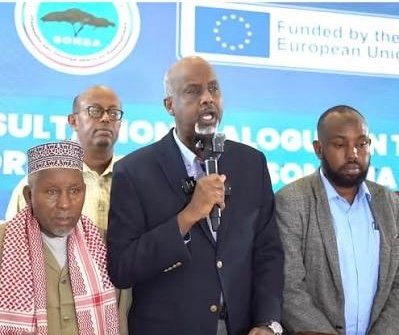
MOGADISHU — Somalia’s civil society organizations played a pivotal role in helping prevent a deepening political crisis from escalating into broader instability by promoting dialogue, encouraging compromise, and advocating for peaceful engagement among the country’s political leaders.
As political tensions mounted over constitutional disputes, electoral disagreements, and the expiration of government mandates, civil society groups—including traditional elders, religious leaders, women’s organizations, youth groups, academics, business leaders, and human rights advocates—called on all political actors to put the national interest ahead of partisan differences.
The organizations facilitated consultations, encouraged informal dialogue between political stakeholders, and issued public appeals urging restraint, compromise, and respect for democratic principles. Their sustained engagement helped ease tensions at critical moments and encouraged leaders to continue negotiations rather than resort to confrontation.
Civil society also stressed the importance of safeguarding Somalia’s constitutional order, maintaining the neutrality of state institutions, and ensuring that political disputes did not undermine the country’s fight against al-Shabaab or weaken national security.
Women’s and youth organizations actively advocated for inclusive governance, broader public participation, and peaceful conflict resolution, while religious leaders promoted reconciliation, consultation, and national unity as the foundation for resolving political disagreements.
Business leaders also warned that prolonged political uncertainty could discourage investment, slow economic growth, disrupt humanitarian operations, and erode public confidence. They urged political leaders to reach a broad national consensus that would preserve stability and ensure the continued delivery of essential public services.
Through these collective efforts, civil society created space for constructive engagement among political actors, helping reduce the risk of institutional paralysis and preventing the crisis from escalating into widespread unrest. Although significant political challenges remain, the role played by civil society demonstrated the importance of independent civic institutions in fostering dialogue, defending democratic governance, and supporting peace during periods of political transition.
Somalia’s experience underscores how an active and independent civil society can serve as a bridge between competing political factions, helping preserve national stability and encouraging peaceful, consensus-based solutions during times of constitutional uncertainty.