
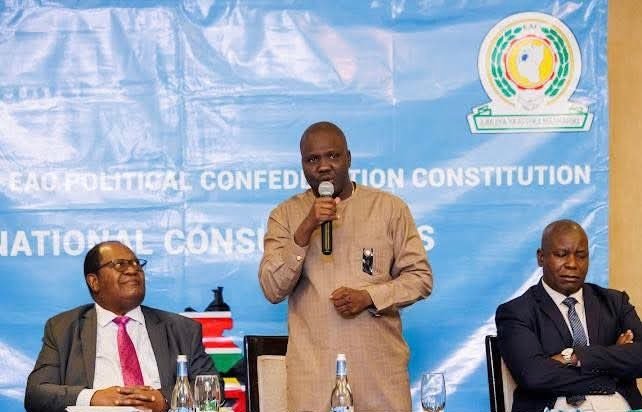
KIGALI – Experts tasked with drafting the Constitution for the proposed East African Political Confederation have continued national consultations in Rwanda, bringing together civil society organisations, religious leaders, academics, youth representatives, women’s groups, persons with disabilities, national think tanks, and other stakeholders.
The consultations, organised under the framework of the East African Community (EAC), are aimed at gathering views and recommendations on the draft constitution that is expected to lay the foundation for deeper political integration among EAC member states.
According to officials, the exercise provides citizens and stakeholders with an opportunity to review the draft document and contribute to shaping the future governance structure of the proposed East African Political Confederation.
The East African Community views the Political Confederation as a key step towards its long-term goal of regional integration. Once consultations are completed across member states, experts will review submissions and incorporate agreed recommendations into the final draft constitution.
The EAC currently consists of eight member countries: Kenya, Uganda, Tanzania, Rwanda, Burundi, the Democratic Republic of Congo, South Sudan and Somalia.
Regional leaders have long envisioned deeper integration through the establishment of common political institutions, a single market, a monetary union and eventually a common currency and travel framework that would facilitate the free movement of people, goods and services across member states.
Officials say the proposed constitution will define the powers, institutions and governance mechanisms of the future Political Confederation while safeguarding the sovereignty and interests of member states.
The East African Community, one of Africa’s fastest-growing regional blocs, has often cited the European Union as an example of regional cooperation and integration. The bloc is also seeking to strengthen partnerships across the region and potentially expand membership in the future.
The ongoing consultations are expected to play a crucial role in determining the final shape of the constitution before it is submitted to EAC leaders for consideration and possible adoption.